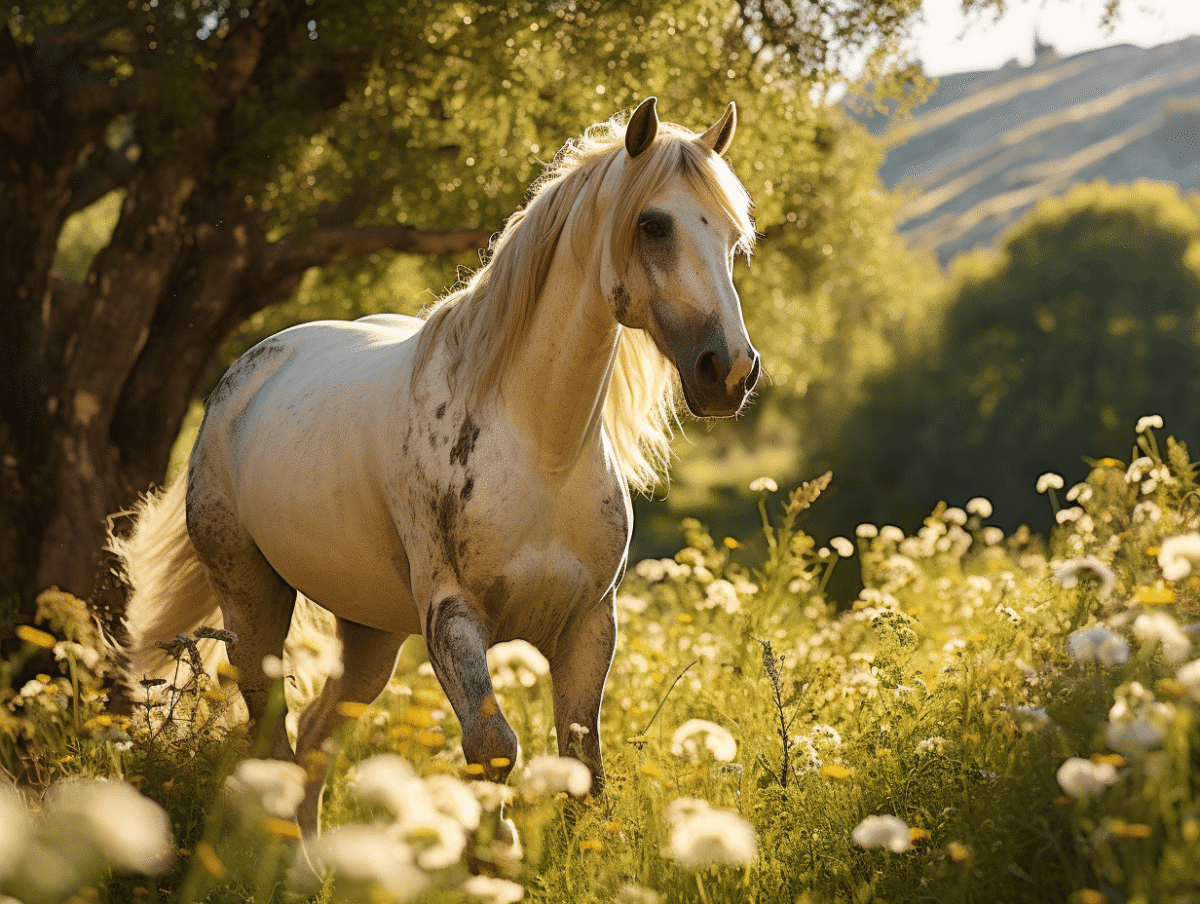
Equestrianism, this centuries-old equestrian art, has often been associated with noble horse breeds, but a special tribute should be paid to the lesser-known equines that captivate with their astonishing beauty. From horses with exotic coats to sturdy mountain ponies, each breed possesses its unique grace. These creatures, although overshadowed by their more illustrious cousins, radiate a singular splendor and evoke a diversity that enriches the heritage of equestrianism. Their preservation and promotion remind us of the importance of biodiversity within the equestrian world, where every individual, regardless of its origin, deserves recognition and admiration.
Equestrianism and its atypical equines: a celebration of diversity
In the equestrian field, admiration for gray horses continues to grow. These equines, whose coat evolves over time, perfectly illustrate nature’s ability to surprise us. Their color, initially dark, transforms into a silver hue as they age, a depigmentation process that fascinates and contributes to the unique aesthetics of these animals. Their presence in the world of equestrianism reveals the richness and variety of this realm, where every species has its place and role to play.
The care of gray horses proves to be an art in itself, requiring special attention and appropriate care to preserve the beauty of their changing coat. Riders and caretakers use specialized cosmetic products, such as shampoos designed for horses, to maintain the shine and health of their coat. This attention to detail strengthens the bond between the rider and their mount, highlighting the importance of animal welfare in equestrian practice.
Beyond their aesthetics, gray horses and other atypical equines enrich the genetic and cultural heritage of equestrianism. National studs, aware of this heritage, strive to preserve these breeds, often threatened by declining populations. Through exhibitions in museums and events dedicated to equestrian art, these horses become ambassadors of diversity and inspire new generations of riders to celebrate every facet of equestrianism.

Little-known equine breeds: a genetic and cultural heritage to preserve
Uncommon equine breeds constitute a biological and cultural treasure, often underestimated. Their preservation is part of a commitment to safeguarding biodiversity and equestrian heritage. Stud farms and institutions dedicated to breeding play a fundamental role in this mission, maintaining pure lines and participating in the dissemination of knowledge about these breeds. The Selle Français, a sport horse recognized for its performance, exemplifies the excellence of French breeding and underscores the necessity of protecting this living heritage.
The first shedding of gray horses and the subsequent depigmentation process are phenomena that fascinate scientists and enthusiasts alike. These unique characteristics require attentive care, similar to horse shampoos specifically designed to protect and enhance the coat. Benign melanomas, common in these animals, require increased monitoring, illustrating the interdependence between health and aesthetics in the equestrian world.
Modern art, reflecting societal evolutions, has not failed to embrace the equine theme. Horses, particularly atypical breeds, are often depicted in museums and galleries, where they embody power, grace, but also the fragility of nature. These works of art contribute to raising public awareness and elevating collective consciousness about the importance of conserving little-known equine breeds, true jewels of our heritage.