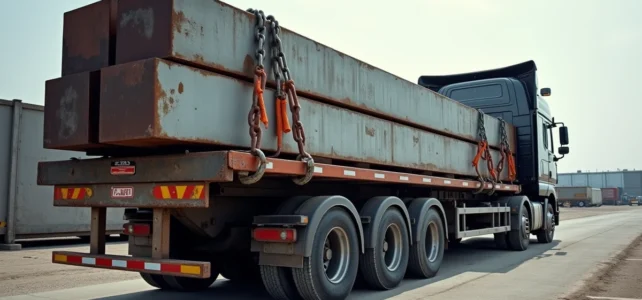
On a civil engineering site, a multi-ton elevating platform is waiting at the roadside. The truck that is supposed to transport it has no walls or roof, just a bare flatbed, anchor points, and a driver who knows his straps. This everyday scenario alone summarizes why the flatbed trailer remains the reference vehicle for heavy, bulky, or irregularly shaped loads.
Securing and Enhanced Inspections: What Changes on the Ground
Roadside inspections related to the securing of loads on flatbeds have tightened in recent years. There are more targeted checks on weight distribution, center of gravity, and the condition of securing devices. For teams managing the transport of heavy goods on flatbeds, this means reviewing procedures before each departure.
Specifically, the load must be centered on the longitudinal axis of the trailer. A lateral imbalance, even moderate, alters the vehicle’s behavior in turns and can trigger a stop during an inspection. Field checklists now include specific points: trailer brake, wedges in place, visual inspection of the flatbed structure, systematic checks of anchor points and locks.
Straps and chains are no longer sufficient on their own. On container flatbeds, rotating locks and additional straps are combined. This double securing approach follows a simple logic: if one device fails, the other keeps the load in place until the vehicle can stop.
Fixed, Extendable, or Low-Profile Flatbeds: Choose According to the Load
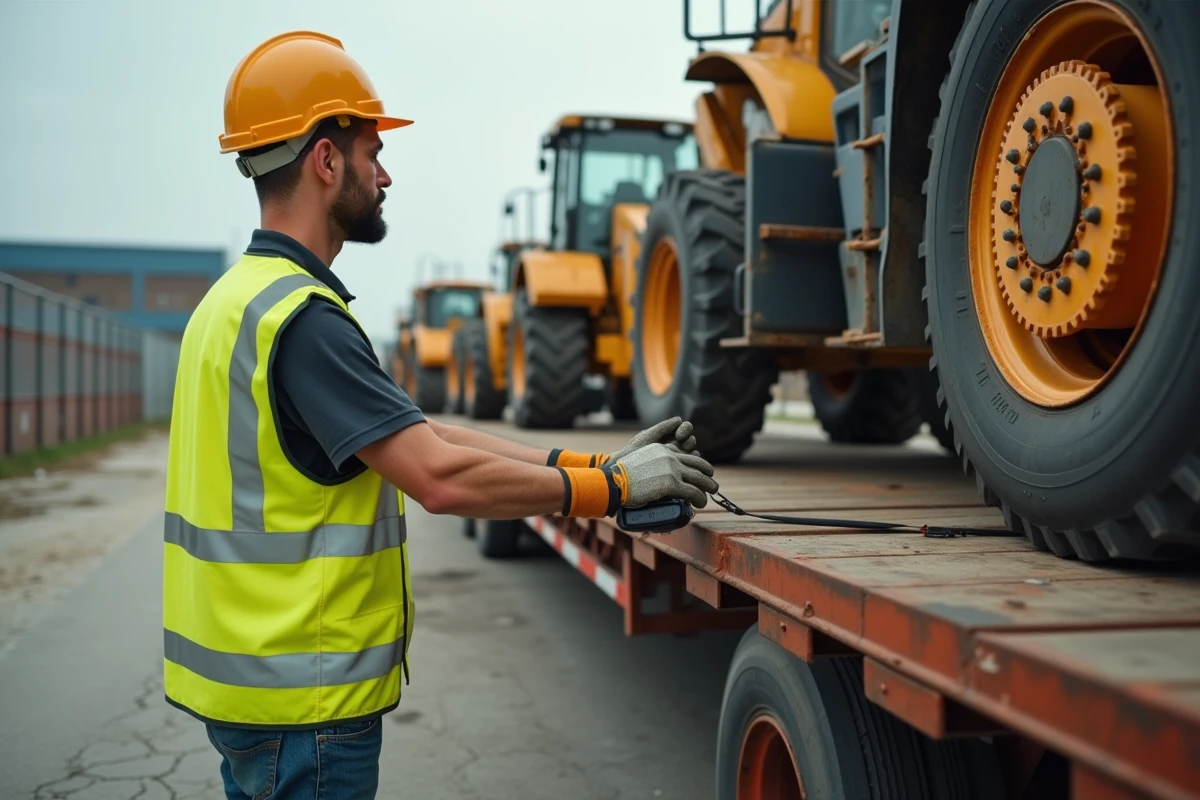
The choice of flatbed type determines the success of the operation. Not all are equal, and confusing uses complicates loading or, worse, exceeds road size limits.
- The fixed flatbed is suitable for standard loads that do not exceed the length of the trailer: metal beams, pallets of construction materials, compact industrial equipment.
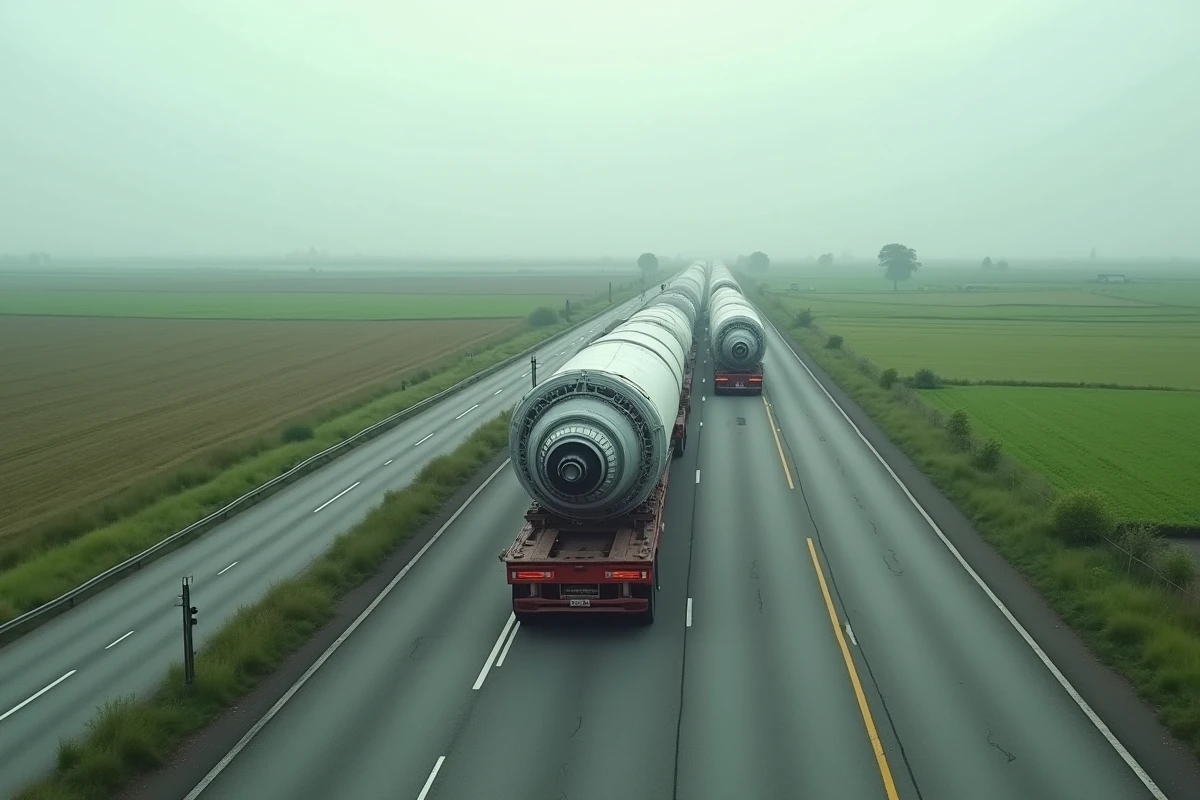
- The extendable flatbed allows for length adjustment for particularly long pieces (pylons, wind turbine blades, prefabricated structures). The structure is extended as needed, but driving requires increased vigilance in tight turns.
- The low-profile flatbed (or equipment carrier) lowers the loading height for tall construction machines like excavators or bulldozers, to stay under the maximum height allowed.
Opinions vary on the benefits of the extendable flatbed compared to a classic exceptional convoy. It all depends on the actual length of the piece and the routes taken.
Flatbed with Mounted Crane: Autonomy on Isolated Sites
When delivering to a mountain construction site, in a remote agricultural area, or on a site without lifting equipment, the flatbed equipped with a hydraulic crane changes the game. The truck loads and unloads itself, without an external crane operator or additional ground equipment.
Handling autonomy reduces costs and delays. One vehicle replaces the entire truck + mobile crane + dedicated operator. In construction, this is standard for the delivery of precast concrete, technical blocks, or metal tanks.
The trade-off: the mounted crane takes up space on the flatbed and adds dead weight. The payload capacity decreases as a result. Therefore, one must balance handling autonomy and tonnage transported with each trip.
Heavy Containers on Flatbeds: Compatibility Rules
The transport of containers loaded with dense bulk (ores, liquid chemicals in tank containers) on container flatbeds has become professionalized. One no longer places a container on a flatbed without checking several critical parameters.
The first point concerns the length compatibility between the container and the flatbed. A 20-foot container does not position the same way as a 40-foot one. The rotating locks (twist-locks) must correspond to the chassis locations; otherwise, the container is not locked properly.
The second point, often underestimated, concerns the total height once the container is loaded. A high-cube container filled with dense goods, placed on a standard flatbed, can exceed the regulatory limit for road size. Before departure, measurements are taken. And if it exceeds, one must switch to a low-profile flatbed or request an exceptional transport permit.
Straps and Chains in Addition to Locks
The rotating locks ensure the vertical stability of the container. The added straps or chains prevent any lateral slipping, especially on winding roads or in strong winds. This double securing has become the norm for long-distance trips.
Reinforced Chassis and Evolution of the Heavy Flatbed Market
The global market for heavy utility vehicles, which includes tractors and carriers for flatbeds, is experiencing steady growth. Manufacturers are developing high-torsion-resistant chassis designed to withstand concentrated loads on a small surface (construction equipment, stone blocks, mining equipment).
These “heavy-duty” flatbeds are not just reinforced versions of classic models. Their design incorporates closely spaced cross members, high elastic limit steel floors, and multiplied anchor points to distribute the tension forces of the straps along the entire length.
For road transporters, investing in a flatbed suited to the actual load prevents premature chassis deformation and costly immobilizations. An undersized flatbed compared to the weight or nature of the cargo ages twice as fast.
Thus, choosing a flatbed is not just a matter of length or price. It is primarily a question of compatibility between the load, the route, and regulatory requirements. A good match between the type of flatbed, the securing device, and the transported goods remains the foundation of a successful heavy logistics operation, without unpleasant surprises at the first roadside inspection.