A senior who stumbles on the edge of a sidewalk, another who hesitates to get up from a low chair without support: these everyday situations reveal a balance deficit long before the first serious fall. Working on stability is no longer limited to a few morning stretches. Approaches have changed, and today we have structured programs, quick screening tools, and practices that combine physical effort and cognitive stimulation.
Balance test after 60: a screening in less than 30 seconds
Before discussing exercises, it is essential to know where one stands. Recent studies recommend using a balance test that can be performed without equipment in less than 30 seconds after age 60, either during a consultation or at home.
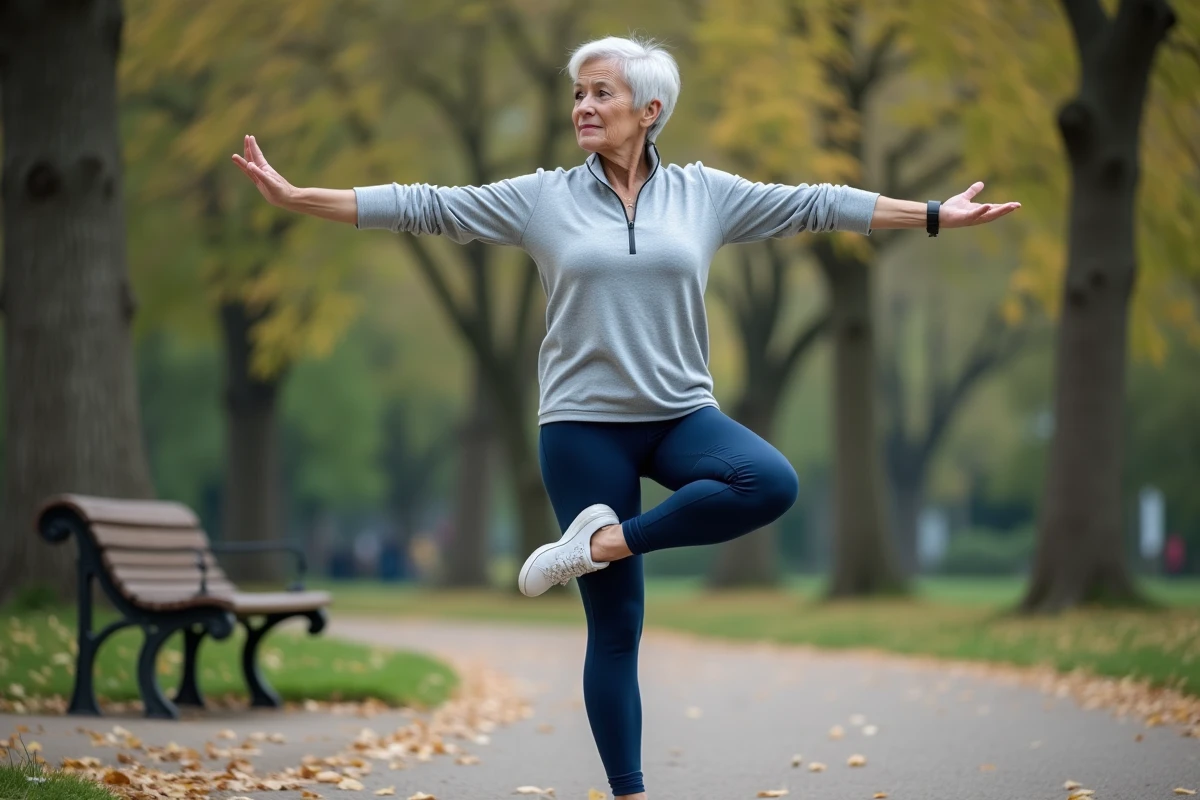
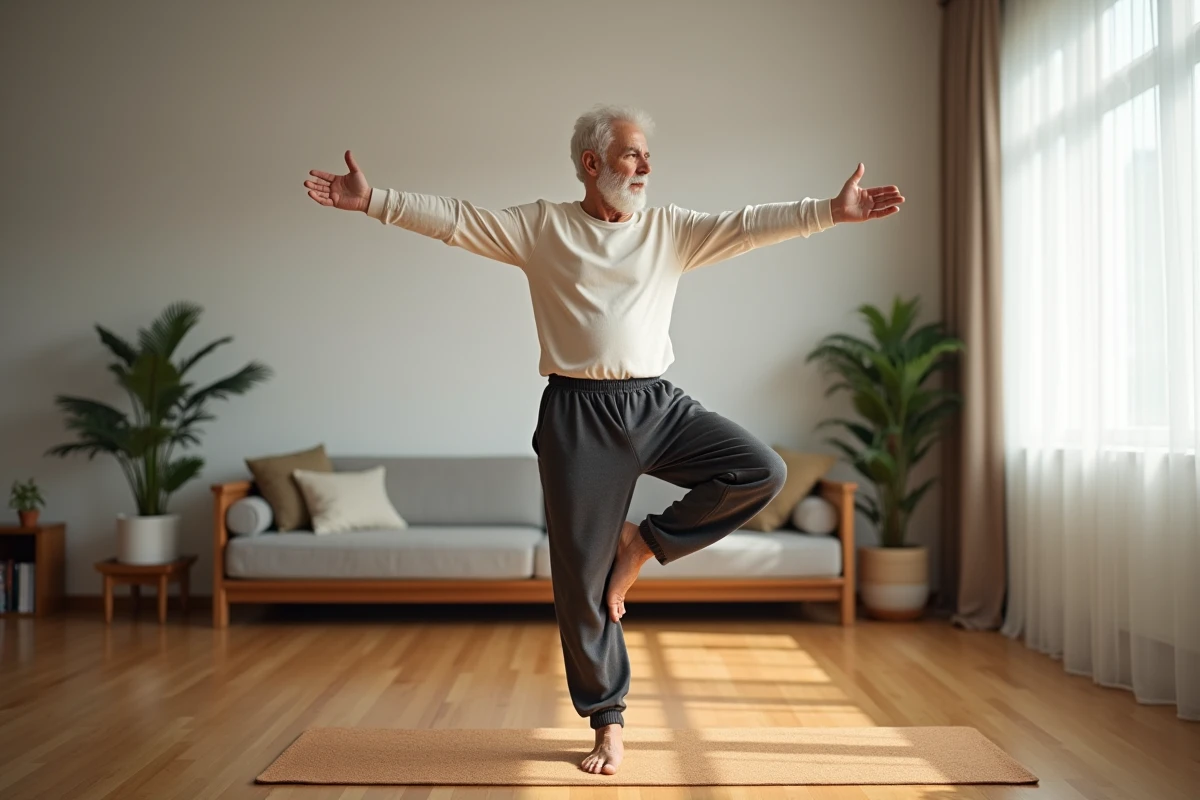
The principle is simple: stand on one leg, barefoot, while timing the duration of the hold. If the position becomes unstable within a few seconds, it is an early warning signal regarding the risk of falling.
This type of test is often underestimated because it seems too basic. In practice, it allows the treating physician or physiotherapist to quickly direct the patient to an appropriate program, rather than waiting for an incident. It serves as a concrete starting point for anyone wishing to follow balance trends for seniors without getting lost in overly vague advice.
Territorial fall prevention programs: Capaidants, Péchus and the national plan
Since the national fall prevention plan launched in 2022, France has been implementing measures that go well beyond simple gym classes in municipal halls. Two programs supported by the MAIF Foundation stand out: Capaidants (which involves caregivers in the process) and Péchus (focused on getting people moving).
The stated goal of the plan is to reduce fatal falls or those leading to hospitalization by 20%. To achieve this, these programs combine physical activity, social support, and geographical proximity.
What it changes compared to a standard class
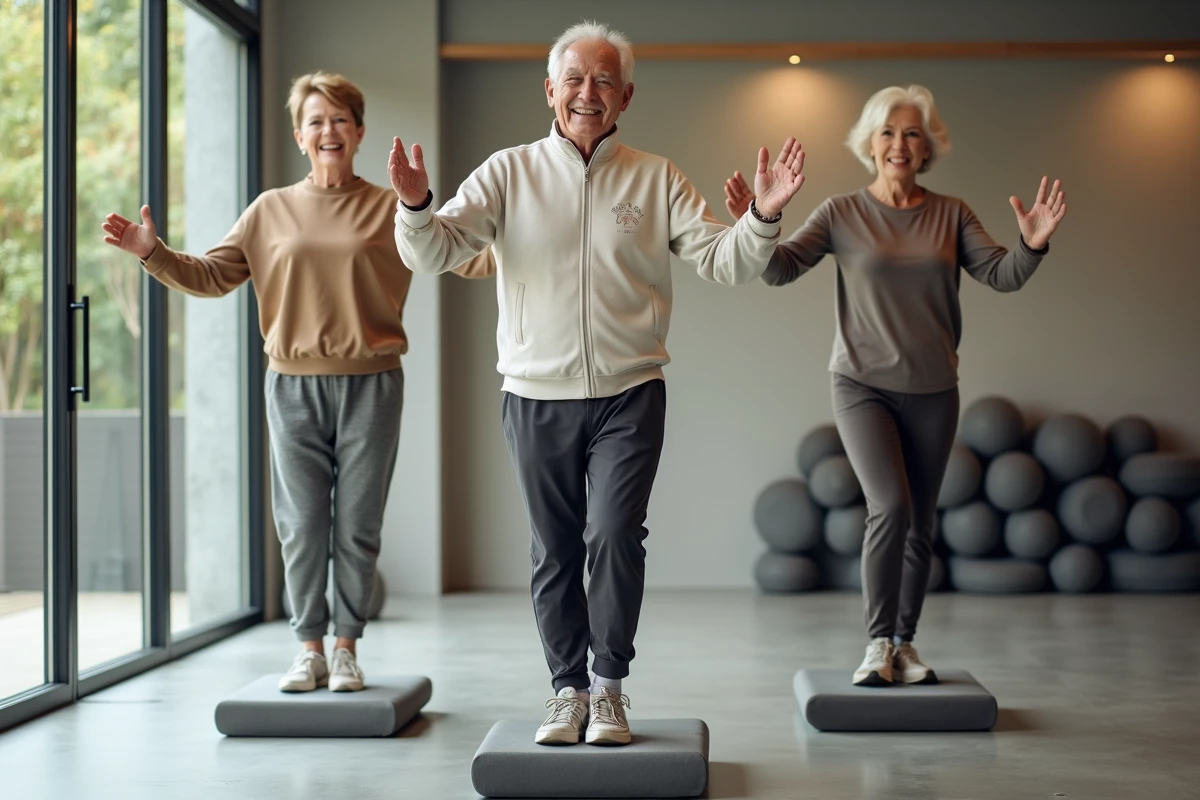
A standard senior gym class offers generic exercises. Structured fall prevention programs first assess the level of fragility, then adapt the content week by week. They work on dynamic balance (walking while changing direction, getting up from the ground), not just static postures.
Social connection also plays a role. Feedback on this point varies, but several participants report that consistency is as much about the group as it is about personal motivation. When you know the people who are waiting for you on Tuesday morning, you go.
Cognitive and motor dual task: the most underestimated approach
Walking in a straight line is something most seniors can manage. Walking while counting backwards by sevens is another matter. This so-called dual task approach combines physical exercise with simultaneous mental engagement.
The interest is direct: in real life, you don’t fall while walking on flat, clear ground. You fall while searching for your keys in your pocket while going down a sidewalk, or while turning your head to respond to someone on the street. The dual task replicates these conditions.
Concrete examples to integrate into your week
- Walk along a marked course (cone, chair, table) while naming animals in alphabetical order, forcing the brain to manage two streams of information
- Throw and catch a lightweight ball while standing on one foot, then alternate, to work on coordination and proprioception simultaneously
- Do lateral shuffling steps while reciting the days of the week backwards, an exercise that can be done in a hallway without any equipment
These playful exercises can be practiced alone or in a group. They are particularly effective when repeated three to four times a week, even in short sessions of ten to fifteen minutes.
Online adapted physical activity: structuring a program from home
Adapted physical activity (APA) is now recognized as a therapeutic tool in its own right for healthy aging. It is no longer limited to community centers: supervised programs led by qualified instructors are accessible online, including for individuals with limited mobility.
The main advantage is personalization. An APA instructor assesses abilities, sets progressive goals, and adjusts exercises remotely through video sessions. For a senior living in a rural area or hesitant to go out in winter, this is a viable solution.
What criteria to check before signing up
- The qualifications of the instructor: look for a degree in adapted physical activity (STAPS license with APA-S mention or equivalent), not just a fitness coach
- The presence of an initial assessment with questions about fall history, ongoing treatments, and joint limitations
- Regular follow-up (at least monthly) to adapt progression, not just access to pre-recorded videos
- The possibility to combine online sessions and in-person sessions when weather or mobility allows
This hybrid format allows for maintaining regularity over the long term, which remains the determining factor. Three sessions per week for six months yield visible results in stability and self-confidence, much more than intensive efforts over a few weeks.
Targeted muscle strengthening: the groups that matter for stability
We often think of the legs when discussing balance. However, the deep trunk muscles play a central role. The bird dog exercise, for example, engages the stabilizers of the pelvis and spine in a quadruped position, with alternating extension of one arm and the opposite leg.
This movement can be easily modified: one can start by lifting only one arm, then only one leg, before combining both. A progressive strengthening of the trunk reduces postural sway and improves reactivity to sudden imbalance.
The calves and ankles also deserve specific work. Rising onto the balls of the feet, performed near a work surface for safety, strengthens the muscle chain that first responds during a misstep.
Working on balance after age 60 is not a luxury or a passing trend. Quick screening, structured territorial programs, cognitive dual tasks, and online APA form a coherent set. The most challenging part is not finding the right exercise, but sticking with it long enough for the body to reap lasting benefits.