
In the world of gardening, maintaining a lush and healthy lawn is often the Holy Grail for green enthusiasts. Watering plays a crucial role in preserving this green oasis that beautifies our gardens. To achieve a radiant lawn, it is not enough to pour water randomly. There are optimal watering methods and frequencies to adhere to. Watering techniques vary depending on the type of grass, climate, and season. A good watering strategy can make all the difference in terms of the health and aesthetics of the lawn.
Optimizing watering for a healthy and sustainable lawn
Knowing the grass’s needs is essential for any lawn maintenance. The watering strategy must be meticulously crafted to meet the specific requirements of the grass. Indeed, each type of lawn has its own water needs, varying with the season and weather conditions. Regularly assessing soil moisture allows for adjustments in the amount of water needed to avoid any excess that could harm your lawn’s health. Remember that watering is more than just a maintenance gesture; it actively contributes to the air quality and biodiversity of your green space.
Lawn maintenance is not limited to wise watering. It also requires integrating practices such as mowing and fertilization. Mowing to the optimal height, which varies between 5 and 10 cm depending on the grass species, is crucial for encouraging healthy and dense growth. At the same time, fertilization provides essential nutrients to the grass, including nitrogen, phosphorus, and potassium, which contribute to the vigor and color of the lawn. These two practices, combined with adequate lawn watering, form a winning trio for a perfect lawn.
In this quest for excellence for your green space, don’t forget to equip yourself wisely. The buying tips for thermal mowers, as well as those related to watering systems, should be meticulous. Choose effective tools suited to the size of your lawn that will promote optimal maintenance and facilitate the application of your watering strategy. A well-maintained lawn reflects a set of thoughtful and coherent watering and maintenance practices that combine knowledge, precision, and respect for the environment.
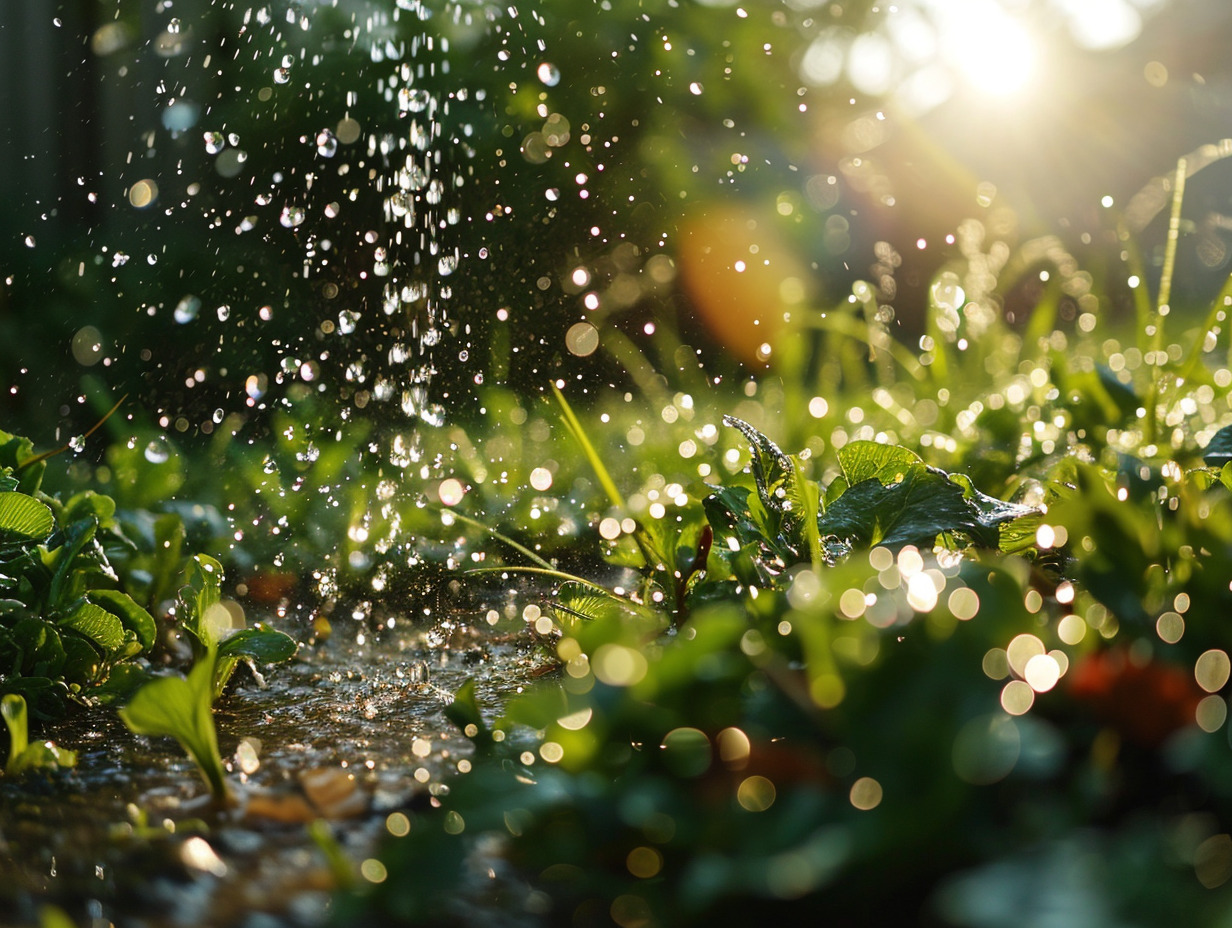
Techniques and tools for economical and effective watering
Mastering the amount of water is one of the keys to successful watering. The amount of water needed to irrigate the lawn should be adjusted according to the grass’s needs, which can vary based on many factors, such as soil type, weather, or grass variety. Using a rain gauge can be valuable for accurately measuring the water applied during watering sessions, thus avoiding waste. Experts agree that water for lawn irrigation should reach a certain depth to encourage roots to grow deep, which strengthens the lawn’s resilience.
Mowing also influences the effectiveness of watering. Grass cut to an appropriate height is less likely to suffer from water stress and uses water more efficiently. A well-mowed lawn allows for better water distribution and promotes uniform nutrient absorption. Fertilization complements this setup by providing essential nutrients. A soil rich in nitrogen, phosphorus, and potassium ensures vigorous growth and enhances the grass’s ability to use water optimally.
In this regard, equipment plays a significant role. Automated irrigation systems equipped with moisture and rain sensors can regulate watering based on actual conditions, ensuring that the grass receives exactly what it needs, no more, no less. These technologies help reduce water waste while preserving the health of the lawn.
Watering during the cooler hours of the day, typically early in the morning or late in the evening, limits evaporation and allows water to penetrate the soil more effectively. Lawn watering should never be done under blazing sun, where water evaporates before reaching the roots. Favor shorter and more frequent watering durations rather than long sessions spaced out, to maintain a constant hydration level without saturating the soil. Fertilization should be carried out according to recommendations for your type of grass, to ensure that the lawn receives all the necessary nutrients for its good health.