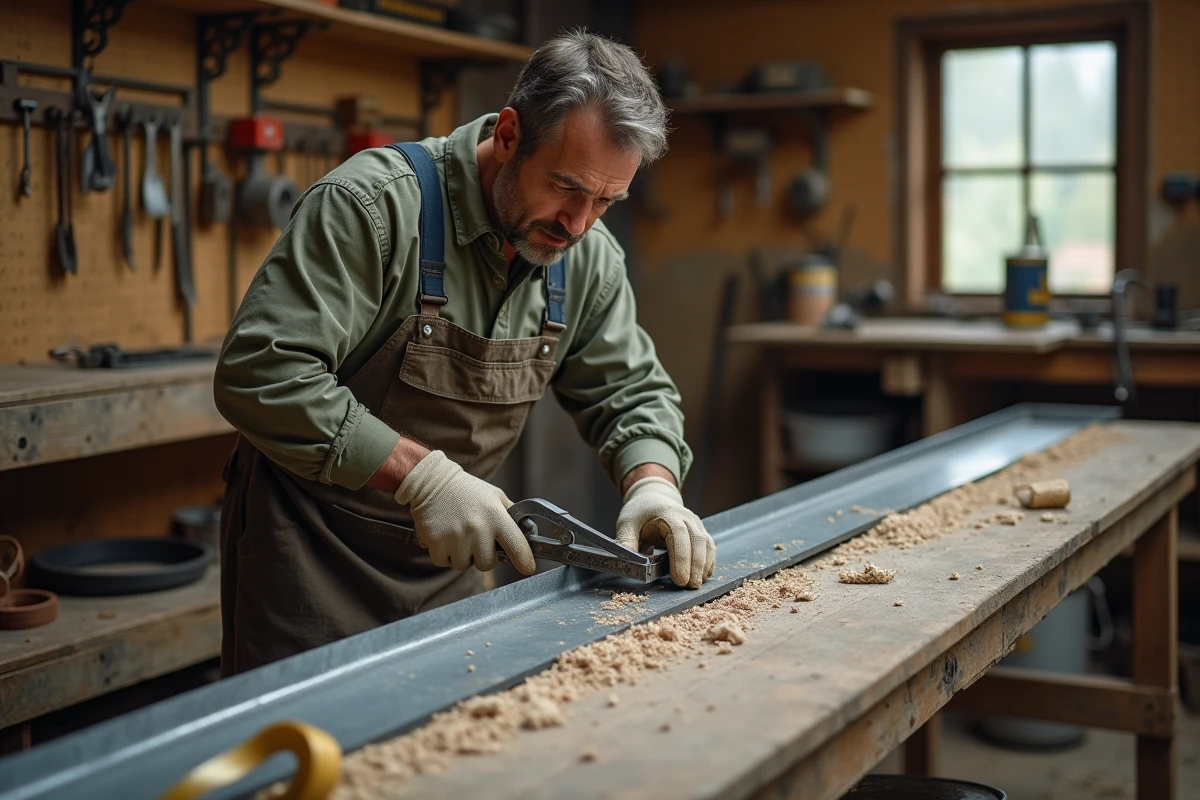
Zinc is not easily cut with the same tools as PVC or steel. Too much heat, and the corrosion-resistant surface treatment disappears. Too much vibration, and the edge deforms. Mastering the techniques for cutting a zinc gutter allows for a clean edge, free of burrs, ready to be assembled or welded.
Why the angle grinder damages zinc gutters
You may have used an angle grinder to shorten a steel pipe. The result is very different on zinc. The disc spins at high speed and causes localized heating that alters the metal.
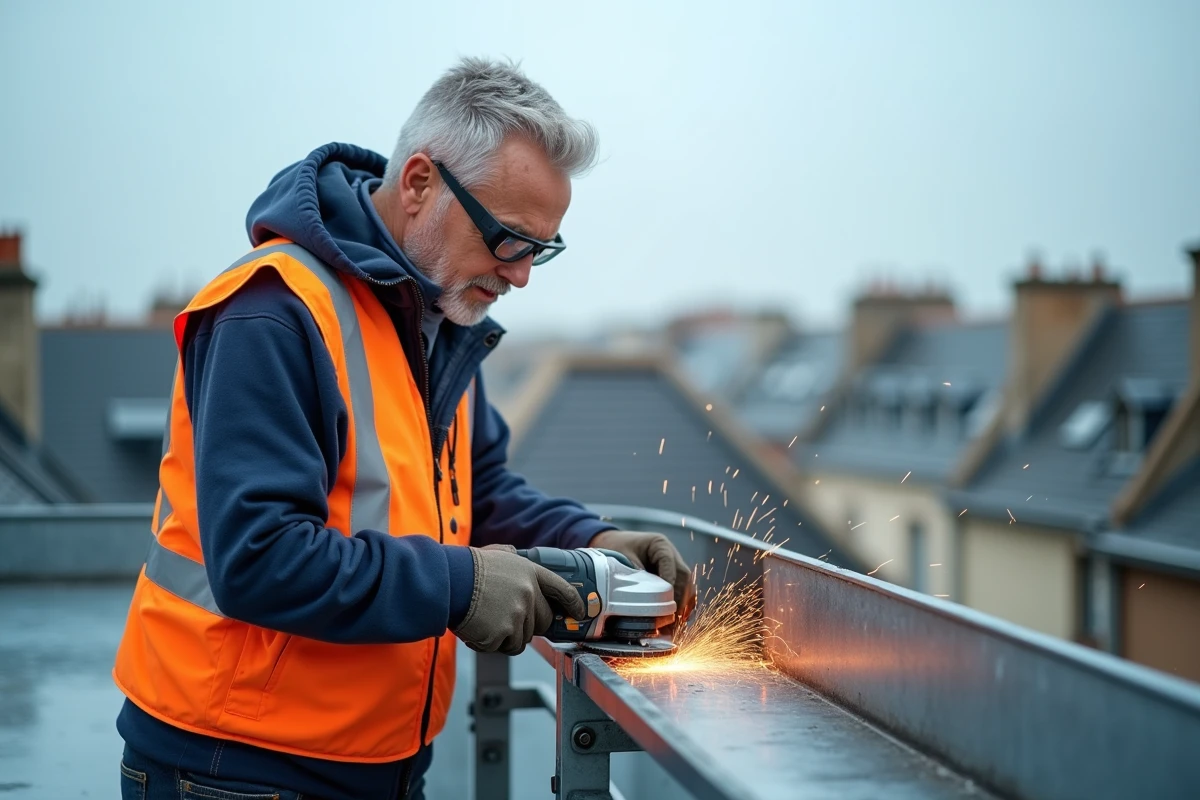
Since 2023, manufacturers like Rheinzink and Nicoll explicitly recommend avoiding the angle grinder for cutting zinc gutters. The main reason: heating destroys the factory-applied corrosion-resistant treatment. Once this coating is degraded, the cut area becomes a weak point against corrosion, especially in the presence of stagnant rainwater.
Flying sparks also pose a safety problem on a roof or near insulating materials. The grinder remains useful for many tasks, but it has no place in cutting roofing zinc. To delve deeper into the techniques for cutting a zinc gutter, several manual and electric methods offer much better results.
Zinc shears: the cleanest manual cut
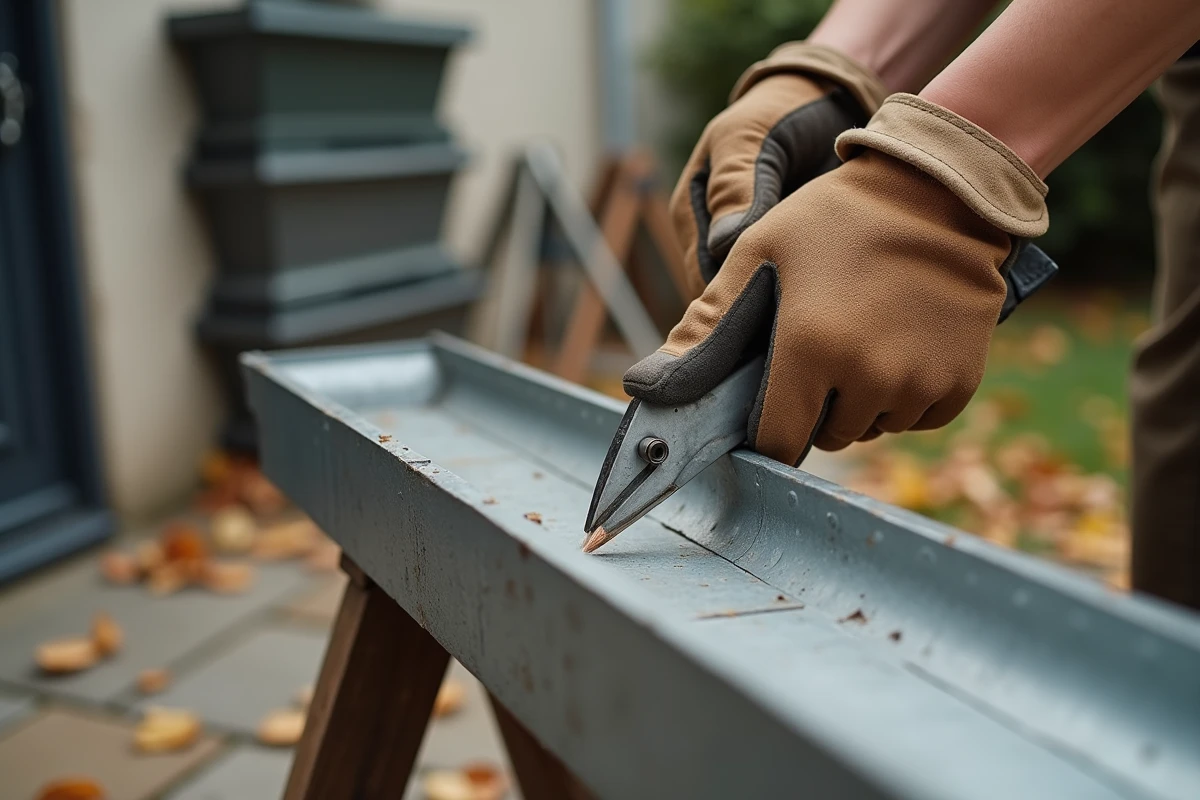
Aviation shears (or sheet metal shears) are the basic tool for the zinc roofer. They come in straight cut, left cut, and right cut versions, each model corresponding to a cutting direction.
To cut a half-round gutter, first mark a line with a marker around the profile. The shears then attack the edge, following the line. Always cut on the outside of the line to maintain the exact measurement. Any small residual burrs can be removed with a fine file or sandpaper.
When the shears show their limits
On thick zinc (square downspout profiles, for example), manual shears require a lot of force. Long, straight cuts quickly tire the hands. This is where electric tools take over.
Electric nibblers for zinc: speed and precision on site
The nibbler cuts the metal by nibbling small confetti, without heating or deforming the edge. It is an increasingly used tool by roofers, especially on renovation sites.
Field feedback shows a growing adoption of battery-powered nibblers. Their advantages are clear:
- No sparks or metal projections, allowing work near sensitive materials or in inhabited areas
- A noise level much lower than that of a saw or grinder, suitable for work in occupied environments
- A cut that easily follows the curves of a half-round profile, where a saw imposes a straight trajectory
The nibbler leaves a slightly serrated edge that smooths out with a few passes of a file. This minor inconvenience is largely offset by the complete preservation of the zinc’s surface treatment.
Metal saw and reciprocating saw: two complementary options
The classic metal saw remains a relevant choice for occasional cuts. It is inexpensive, requires no electrical power, and produces a fine cut if the blade is suitable (fine tooth, at least 24 teeth per inch).
Always secure the gutter before sawing. A half-round profile lying on the ground rolls under the pressure of the blade. Two clamps on a workbench or a vise are enough to keep the piece stable. The sawing motion should remain steady, without pressing too hard, to avoid bending the zinc at the cut.
The reciprocating saw for high cuts
The reciprocating saw (or saber saw) equipped with a fine metal blade allows for cutting directly a downspout already fixed to the wall. This is a considerable time saver in renovations when shortening a drain pipe without disassembling it. Choose a bi-metal blade with fine teeth to limit vibrations.
Preparing the cut and finishing the edge
Whatever tool is chosen, the quality of the cut depends as much on preparation as on the action. Here are the steps not to skip:
- Mark the cutting line with a fine marker, rotating the profile to mark the entire perimeter
- Check the squareness with a carpenter’s square placed against the edge of the gutter
- Always deburr after cutting, with a flat file or 120-grit sandpaper
- Apply a sealant or anti-corrosion paste on the edge if the gutter will be exposed to roof drainage water
A poorly deburred edge prevents the correct fitting of joints. On a zinc gutter assembled by soldering, a burr creates an almost invisible sealing defect that will cause a leak a few months later.
Safety during cutting
INRS reminds us that the cutting method should be chosen based on the possibility of working from the ground or a stable scaffold. Cut on the ground whenever possible, then lift the piece to install it. Cut-resistant gloves, safety glasses, and safety shoes are essential, even for a single cut with shears.
The choice of the right tool depends on the context: shears for a quick touch-up, nibbler for a complete job, metal saw for a power outage repair. The common point among all these methods is to preserve the zinc against corrosion by avoiding any overheating. A clean, deburred, and protected edge ensures reliable rainwater drainage for decades.