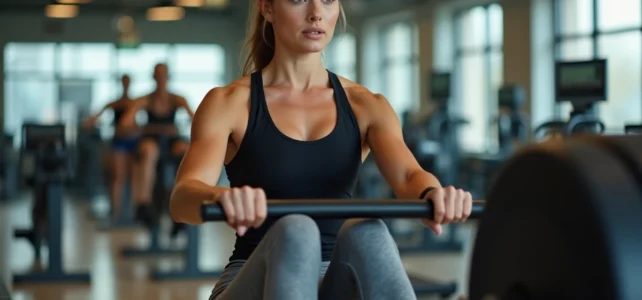
Love handles refer to the clusters of subcutaneous fat located on the sides, above the hips. No exercise machine allows for their isolated targeting: localized fat loss does not exist physiologically. Therefore, the choice of a device depends on its ability to generate a high caloric expenditure while engaging the core muscles, particularly the obliques and transversus, to refine the silhouette at the waist.
Caloric Expenditure and Mobilization of Lateral Fats: What Physiology Requires
The fat stored on the sides is mobilized when the body taps into its lipid reserves to fuel prolonged effort. This mechanism depends on the overall energy deficit, not the muscle area being worked. Therefore, an exercise that burns a lot of calories per unit of time reduces fat mass everywhere, including the hips.
The lipid intensity zone is between 60 and 75% of maximum heart rate. Working within this range during sufficiently long sessions promotes the proportion of fats used as fuel. The IHRSA Global Report 2023 states that practitioners using a connected heart rate monitor on their machine, with real-time display of the intensity zone, achieve a measurable decrease in waist circumference over 12 weeks compared to those training without monitoring.
Before choosing a machine to lose love handles, one should think in terms of calories burned per session and core muscle engagement, rather than based on promises of localized targeting.
Rowing Machine and SkiErg: The Machines That Engage Core Muscles the Most
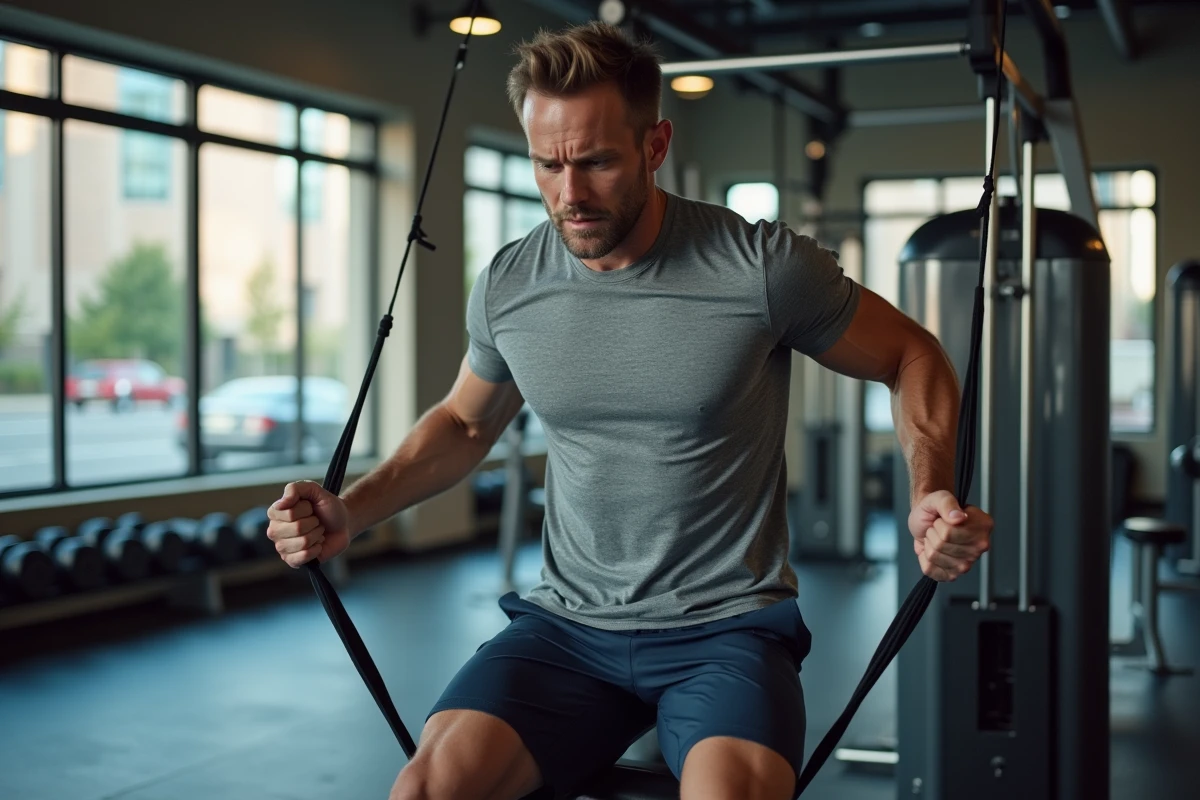
The rowing machine (or pulling ergometer) engages about 86% of total muscle mass with each stroke. The pulling motion and partial torso rotation directly target the obliques and transversus, the two muscle groups that shape the waist. The caloric expenditure per hour is among the highest of all gym cardio machines.
The SkiErg operates on a similar principle, but in a standing position. The downward pulling motion engages the latissimus dorsi, abdominals, and obliques in an explosive pattern. For the sides, the SkiErg requires dynamic stabilization with each repetition, making it a formidable complement to the rowing machine.
These two devices share a decisive advantage: they combine sustained cardiovascular effort and core muscle work in the same movement. While a treadmill only engages the core for passive stabilization, the rowing machine and SkiErg actively integrate it into the force chain.
How to Structure a Rowing Session for the Sides
Alternating between intervals of intense effort (30 to 45 seconds at high cadence) and phases of active recovery (one to two minutes at a moderate pace) increases post-exercise caloric expenditure. This interval training format, sometimes referred to as HIIT, keeps the heart rate in ranges favorable for lipid mobilization while enhancing dynamic stabilization with each rhythm transition.
Elliptical Bike and Treadmill: Effective Under Certain Conditions
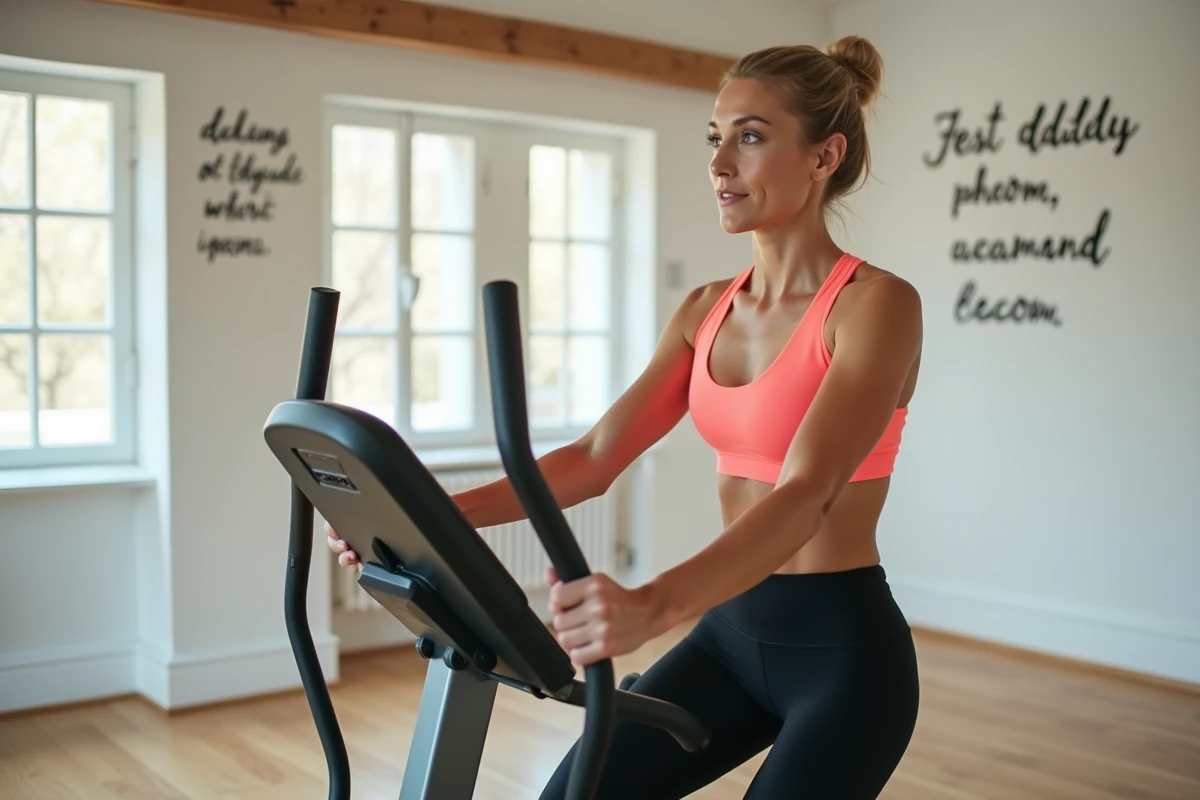
The elliptical bike offers a smooth, low-impact movement that engages both the upper and lower body. Core engagement remains moderate if posture is not controlled. To target the oblique area more, increasing resistance and releasing the movable handles forces the torso to stabilize the movement, activating the abdominal belt.
The treadmill, on the other hand, generates high caloric expenditure, especially when inclined. Fast walking on an incline engages the glutes and stabilizing muscles of the pelvis, but the core remains passively engaged: it stabilizes without producing force. It is an effective machine for overall caloric deficit, but less so for direct waist strengthening.
- Elliptical bike without handles: activates the obliques to compensate for the instability of the upper body, provided a sustained pace is maintained for at least 30 minutes.
- High incline treadmill: increases caloric expenditure compared to flat, but does not add significant work on the sides.
- Classic stationary bike: low core engagement, useful for basic cardio but insufficient alone to refine the waist.
NEAT and Low-Intensity Machines: The Underestimated Factor
James Levine’s work at the Mayo Clinic, published in the journal Diabetes (2021), highlighted the role of NEAT (Non-Exercise Activity Thermogenesis) in reducing abdominal and lateral fat mass. NEAT encompasses all caloric expenditures outside structured exercise: walking, standing, moving daily.
Devices like compact office walking treadmills, mini-steppers, or desk-bikes allow for increasing this background expenditure over several hours a day. The American College of Sports Medicine (ACSM, 2022) recommends adding daily energy expenditures rather than relying solely on intense sessions.
In practical terms, using a walking treadmill under a desk for several hours a day contributes more to caloric deficit than a single 45-minute session if the rest of the day is sedentary. This principle does not replace structured training, but it multiplies its effect on fat loss around the sides.
Combining Muscle Strengthening and Cardio on Machines: The Sequence That Works
Strength training alone is not enough to eliminate love handles, but it alters body composition by increasing muscle mass, which raises caloric expenditure at rest. An effective sequence combines targeted strengthening work on the abdominal belt (side planks, cable rotations) followed by a cardio session on a rowing machine or elliptical.
- Start with 10 to 15 minutes of core strengthening: side planks, woodchop on the cable machine, oblique crunches.
- Follow with 20 to 30 minutes of cardio on the rowing machine or SkiErg, keeping the heart rate in the lipid zone.
- Finish with 5 minutes of cool down on a low-resistance bike.
This sequence works because the prior strengthening pre-activates the core muscles, which remain engaged during the cardio phase. The rowing machine after working the obliques targets these muscles in a state of partial fatigue, increasing their recruitment with each pulling motion.
The choice of machine matters less than the regularity and combination of approaches. A rowing machine used three times a week with heart rate monitoring will yield visible results on the sides in a few months, provided that diet supports the effort.